




The Role of Vacuum Ovens in Advanced Packaging
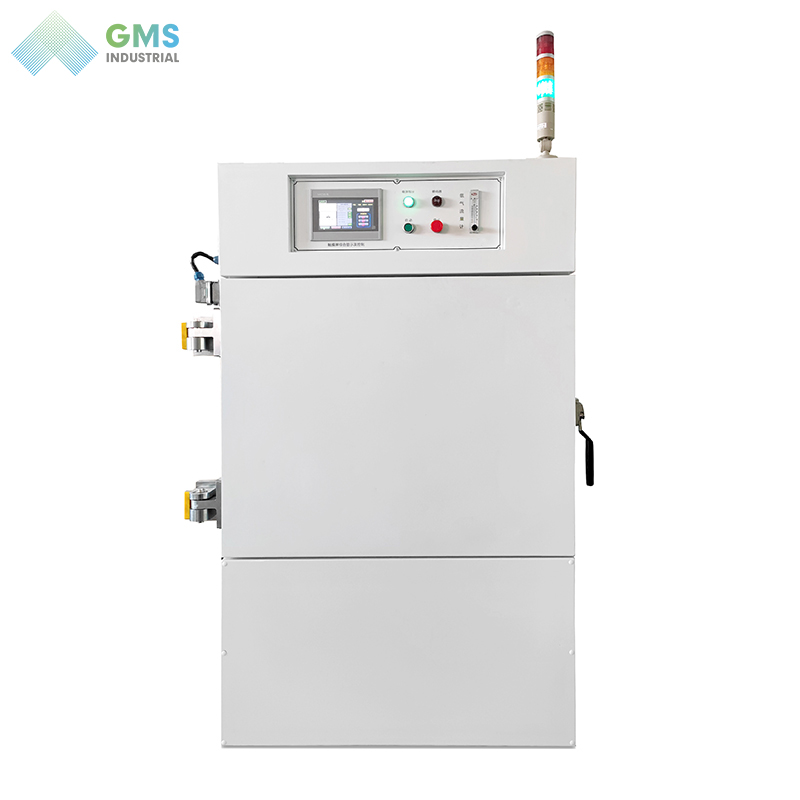
In the back-end processes of semiconductor manufacturing, advanced packaging technologies are rapidly evolving towards high density, high performance, and three-dimensional integration. From traditional wire bonding to advanced packaging solutions such as flip chip, wafer-level packaging, 2.5D/3D stacking, and fan-out packaging, stringent standards are being placed on the cleanliness, temperature uniformity, and atmosphere control of thermal processing. As a core baking equipment ensuring packaging yield and device reliability, the advanced packaging vacuum oven constructs a high-vacuum or low-oxygen inert gas-protected atmosphere. Under precisely controlled temperatures, it removes moisture and volatile impurities from wafers, substrates, and packaging materials, prevents high-temperature oxidation, and ensures critical processes such as silver paste curing, underfill curing, and wafer bonding. This guarantees the quality consistency and product reliability of advanced packaging.
Ⅰ. The Role of Vacuum ovensin Advanced Packaging
1. Moisture Removal and Drying of Moisture-Sensitive Components:
Semiconductor packaging materials, especially molding compounds, underfill materials, and various organic substrates, exhibit varying degrees of moisture absorption. When materials absorb moisture from the environment, the water rapidly vaporizes and expands during subsequent reflow soldering or high-temperature processes, leading to fatal defects such as delamination, the "popcorn effect," or gold wire sweep. By heating in a vacuum environment, the vacuum oven lowers the boiling point of water molecules within the materials at relatively low temperatures, allowing them to escape from the interior more efficiently and be extracted. This function is particularly important for devices with high moisture sensitivity levels (MSL) and is a standard pre-packaging process.
2. Outgassing and Curing Processes:
Materials widely used in advanced packaging, such as epoxy adhesives, liquid encapsulants, and photoresists, release volatile by-products during curing. If these gases are trapped within the package, they form voids or bubbles, severely affecting the thermal dissipation and mechanical strength of the package. The vacuum oven continuously evacuates the chamber during the curing process, promptly expelling volatile substances to ensure dense and thorough material curing. In wafer-level packaging, soft bake and hard bake steps for liquid photoresists are also often performed in a vacuum to prevent bubble formation within the photoresist layer during solvent evaporation, thereby ensuring the accuracy of pattern transfer.
3. Oxidation Prevention and Surface Protection:
Metal structures extensively used in advanced packaging, such as copper pillar bumps, copper redistribution layers (RDL), and gold wires, are highly susceptible to oxidation at high temperatures. The formation of an oxide layer significantly increases contact resistance, reduces bond strength, and can even lead to device failure. By evacuating air from the chamber and introducing inert gas protection, the vacuum oven effectively isolates oxygen, protecting metal surfaces from oxidation during heating. This function is particularly critical in copper wire bonding processes, as copper oxidizes much faster than gold and must undergo thermal treatment in an inert atmosphere or vacuum.
4. Stress Relief and Warpage Control:
Differences in the coefficient of thermal expansion (CTE) between various materials in advanced packaging are the root cause of thermal stress. In 2.5D/3D packaging, multiple materials such as silicon interposers, organic substrates, and molding compounds are stacked together. After multiple temperature cycles, significant residual stress accumulates at the interfaces, leading to wafer warpage or even chip cracking. The vacuum oven provides uniform and controllable heating and cooling processes, allowing the stress within the package to be gradually released. The vacuum environment avoids temperature non-uniformity caused by air convection, helps reduce thermal stress caused by temperature gradients, effectively controls wafer warpage, and improves alignment accuracy in subsequent processes.
5. Special Applications in Fan-Out Packaging:
In Fan-Out Wafer-Level Packaging (FOWLP) and Panel-Level Packaging (PLP), the molding compound needs to be cured after chips are embedded. The vacuum oven eliminates bubbles in the molding compound during this process, preventing void defects in the molded package. In chip-first processes, the reconstituted wafer undergoes temporary bonding adhesive curing in a vacuum oven to ensure that chips do not shift or detach during subsequent thinning processes.
6. Applications in Hybrid Bonding Processes:
As a key technology for achieving 3D stacking, hybrid bonding imposes extremely high requirements on the cleanliness and flatness of the bonding interface. After surface activation treatment prior to bonding, wafers require low-temperature annealing in a vacuum oven to promote Cu-Cu diffusion bonding and dielectric layer chemical bonding. The vacuum environment effectively prevents copper surface oxidation during annealing, ensures smooth metal interdiffusion at the bonding interface, and achieves highly reliable electrical connections and mechanical bonding.
Ⅱ. Baking Process Requirements for Advanced Packaging
1. Temperature Uniformity and Precise Control:
Advanced packaging imposes extremely stringent requirements on the temperature uniformity of the baking process. In 2.5D/3D packaging, temperature differences across a wafer or panel can lead to inconsistent curing degrees of materials in different areas, causing warpage and stress concentration. Vacuum ovens must possess excellent temperature uniformity, typically requiring precision within ±1°C or higher in the effective working area. This relies on precise heating plate design, multi-point temperature feedback control, and optimized thermal field distribution. The response speed and stability of the temperature control system are also crucial, requiring the ability to quickly reach the set temperature and maintain it for extended periods, avoiding process repeatability issues caused by temperature fluctuations.
2. Vacuum Level Control and Leak Rate Indicators:
The vacuum level is a core parameter affecting baking results. Different process stages have varying requirements for vacuum levels, necessitating flexible adjustment from rough vacuum to high vacuum. In outgassing and curing processes, the chamber vacuum level is typically required to reach the millitorr range to ensure volatile substances can fully escape. The leak rate of the vacuum oven is a key indicator of equipment performance; an excessive leak rate prevents the vacuum level from being maintained and allows external gas to infiltrate, affecting process quality. The equipment must have excellent sealing performance and vacuum holding capacity, equipped with real-time vacuum monitoring and feedback regulation systems during the process.
3. Cleanliness Requirements:
Advanced packaging processes are extremely sensitive to particulate contamination, and the interior of the vacuum oven must provide a high-cleanliness environment. Internal chamber materials must be made of low-outgassing, corrosion-resistant special stainless steel or aluminum alloys, with surfaces specially treated to reduce the risk of particle shedding. The design of heating elements and internal components should avoid particle generation and facilitate cleaning and maintenance. In wafer-level packaging, the baking process directly contacts the wafer surface; any particulate contamination can cause circuit shorting or open circuits. Equipment typically must meet cleanliness standards of Class 1000 or Class 100 and above.
4. Heating/Cooling Rates and Process Recipe Management:
Different packaging materials and processes have varying requirements for heating and cooling rates. Temperature-sensitive materials require slow heating to avoid thermal shock that could cause cracking, while curing processes require rapid heating to improve production efficiency. Vacuum ovens need to possess adjustable heating/cooling rates over a wide range, typically requiring heating rates adjustable between 1~10°C per minute, with cooling rates also needing precise control. The equipment should support multi-stage process recipe storage and retrieval, allowing preset parameter combinations (temperature, vacuum level, time, etc.) for different product types to ensure process consistency and traceability.
5. Inert Gas Protection and Pressure Regulation:
In processes requiring oxidation prevention, the vacuum oven must be equipped with a high-purity inert gas filling system. The process can flexibly switch between vacuum and inert gas protection to achieve a micro-positive pressure environment. Gas purity and flow control directly affect the protection effect; typically, high-purity gases are required, along with a precise flow control system. Some special processes need to be conducted under specific pressure curves, requiring the equipment to have programmable pressure control capabilities.
6. Safety Protection and Monitoring Systems:
Vacuum ovens operate in high-temperature and high-pressure environments, making safety protection systems indispensable. The equipment must be equipped with multiple safety mechanisms, including over-temperature protection, over-pressure protection, cooling failure protection, and gas leak detection. Key parameters during the process need to be recorded and stored in real-time to support data traceability and process analysis. Remote monitoring and alarm functions are also standard in modern advanced packaging production lines, facilitating production management and fault diagnosis.
As semiconductor baking equipment in back-end processes, the advanced packaging vacuum oven plays a vital role in moisture removal, outgassing and curing, oxidation prevention, and stress relief. As advanced packaging technologies develop toward higher density, more layers of stacking, and finer lines, the technical requirements for vacuum ovens continue to rise. Temperature uniformity, vacuum level control, cleanliness standards, and process flexibility have become core indicators for measuring equipment performance.
 |  |